
Bahrain's Economy: Freest Economy in the Middle East

Bahrain Economic Overview

Bahrain's Economy: Freest Economy in the Middle East

quote
divider_hori

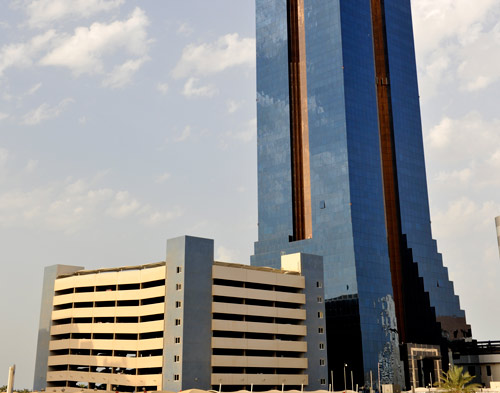
Businesspersons, investors, and knowledgeable observers want to know: How is Bahrain’s economy faring through all this turmoil? The answer: Surprisingly well.

divider_hori

Bahrain is an island country whose total land area is not much bigger than the District of Columbia.

However, these islands occupy in the most strategically centered location in the Persian Gulf, both for trading and military purposes. Located in the Gulf between Saudi Arabia and Iran, south of Kuwait and Iraq, and north of Qatar, the U.A.E, and Oman, it sits in the middle of most oil-rich spaces on earth.

Militarily, the British used it as its headquarters for the Middle East and the route to Asia. After World War II, the Americans took over the British base and made it their center for the region and base of operations for the Fifth Fleet.Bahrain financial Hub

Bahrain has been a major trading center throughout history, even before the Roman Empire. Prior to the early 20th century, it was also famed for its pearls recovered from the shallow seas around it. The first discovery and pumping of oil in the Middle East occurred there in 1931. Pearl recovery declined after 1931, and by the time of independence in 1971, Bahrain was primarily dependent on its oil exports and a refinery built by the British, although it still had a basic trading and banking sector.

The population of Bahrain is far different in population than that of most other nations, in that of its 1,234,571 residents (2010 census), a majority of 666,172 (54%) are non-citizens of the country; while only 538,369 (46%) are actual citizens. Of the total population, 866,888 (54%) are Moslem, while 367,683 (46%) are of other religions (Hindu, Christian, Jewish, etc.).

On New Year’s Day 2011, as Bahrain began the second decade of the 20th century, and the fifth decade of its independence from Britain, there was nothing but good economic news to report. By the 1990s. Manama had replaced Beirut as the banking and financial hub of the Middle East. Between 2000 and 2008, the economy had been growing at the rate of over 6%.

loading the player....

The global financial crisis of late 2008 had, of course, set it back; growth in 2009 was reduced by more than half, to only 2.9%. But in 2010, the economy righted and bounced back to growth of over 4%, and all signs were that growth in 2011 would climb to 5% per annum. In January of 2011, the Index of Economic Freedom rated Bahrain the freest economy in the Middle East, and the best place to do business in the GCC. The future looked bright and sunny without a cloud on the horizon.

 Then, on February 14, 2011,the vast upheaval known as the Arab Spring reached Bahrain, the local version coming to be known by the international media as the Bahrain Uprising.   

Businesspersons, investors, and knowledgeable observers want to know: How is Bahrain’s economy faring through all this turmoil? The answer: Surprisingly well.

2010, 2011, Arab Spring, Bahrain's economy, Britain, Middle East, banking sector, economy in the Middle East, financial crisis, financial crisis, freest economy, future, investors, oil, population, population, religion
Related Articles
Batelco eFax Service - an Investment in Convenience and MobilityBatelco eFax Service - an Investment in Convenience and Mobility... - ( 16-09-2011 12:19:58)
**Free Registration and Two Months Free Rental for New Customers** ...
Bahrain Economic Development: Becoming the Financial Center in the Middle EastBahrain Economic Development: Becoming the Financial Center in the Middle East... - ( 13-09-2011 10:49:00)
Bahrain Top Stories Bahrain Economic Development: Becoming the Financial Center Since independence, the government of Bahrain has used its rev...
Top Foreign Banks in Kuwait | 10  Most Important Foreign Banks in KuwaitTop Foreign Banks in Kuwait | 10 Most Important Foreign Banks in Kuwait... - ( 09-02-2012 12:49:17)
Top Foreign Banks in Kuwait Kuwaiti banks face less competition from the foreign banks due to the protective nature of the regulator. This situati...
Riots in Bahrain: The Problem of Two NarrativesRiots in Bahrain: The Problem of Two Narratives... - ( 14-09-2011 12:26:07)
Bahrain Top Stories Understaning Bahrain: The Problem of Two Narratives On the one side is the narrative of the protestors who claim that they...
 
[Back]

Add comment

Banner


Related Items
 
 
Top Interviews
Dr. Hassan A. Fakhro, Bahrain Minister of Industry & Trade Bahrain Ministry of Industry: Economic & Industrial Development of Bahrain

Dr. Hassan A. Fakhro, Bahrain Minister of Industry & Trade

How much easier it is to be critical than correct (Disaeli). I would ask those who would criticize Bahrain, to look to their own countries

Bahrain National Oil and Gas Authority Outlines Future of Bahrain Oil and Gas Industry

National Oil and Gas Authority, HE Abdul Hussain bin Ali Mirza, Bahrain Minister of Oil and Gas

Today, the income from oil and gas constitutes about 80% of the government's revenue. However, we were also the first GCC country to attempt diversification, in the 1960s and 70s. Thanks to those efforts, oil and gas now only constitute 24% of GDP at current prices (and 12% at constant prices).

Peter Kaliaropoulos, CEO of Bahrain Telecommunications Company (Batelco) Batelco Bahrain: Leading Telecom in the Middle East

Peter Kaliaropoulos, CEO of Bahrain Telecommunications Company (Batelco) - Biography

Key challenge remains overall industry growth in terms of gross revenue and number of services since we have experienced price erosion due to entry of new companies.

Bahrain Government: Reforms, Stability and Economic Growth

HE. Shaikh Fawaz bin Mohammed Al Khalifa, President of the IAA

The Bahrain Government intends to carry on its steady reform for the country. 

Abdulrahman A.Hussain Jawahery, President of Gulf Petrochemical Industries Co. (GPIC) and Member of Parliament GPIC: Role of Bahrain's Fertilizers in World's Food Security

Abdulrahman A.Hussain Jawahery, President of Gulf Petrochemical Industries Co. (GPIC) and Member of Parliament - Biography

AG fertilizer producers are expected to continue to play a strategic role in meeting this challenge by contributing towards international efforts to increase food production by substantially increasing their share of exports.

Bahrain Masterplan: Affordable Housing in Bahrain is the Highest Priority

Aaref Hejres, CEO of Diyar Al Muharraq

Another reason why we think this year is good is that we have just finished our first landsite in Diyar and sold land worth $260 million to a private developer who will build affordable housing.

Omar Al Mardi, Managing Director, Bahrain Financial Harbour Bahrain Financial Harbour: Business Location in the Middle East

Omar Al Mardi, Managing Director, Bahrain Financial Harbour

There is also a higher local demand in Bahrain that differs to other Gulf countries. Because our population density is very high- with 600-700 people per square kilometer, the local demand is enough to push the construction market.