
Education in Morocco: Analysis of Morocco Education Sector
Morocco Sector Analysis
Morocco Education Sector
As a result, literacy for men aged 15-24 rose to 84% by 2008, while the percentage of all students completing primary school rose to 87%.
Featured Interviews: Esserrhini Farissi, President of Sidi Mohammed Ben Abdellah University (SMBAU), Dr. Mohammed Marzak, President of University of Cadi Ayyad (UCA), Driss Ouaouicha, President of Al Akhawayn University, Mohamed Kouam, President of University of Chouaib Doukkali
Morocco Education Sector
>Education “Emergency Plan”
>Maghreb Union Higher Education and Scientific Research Council
>Higher Education
When Morocco achieved independence in 1956, it faced a daunting problem in the field of education. Illiteracy stood at 87%. Prior to independence, almost all the schools other than the madrasas were run and taught by French teachers. But with independence, most of the French colonists who ran the major institutions returned to France—and at the same time, most of the large Jewish population emigrated to Israel. Thus, while the country faced a desperate need for educated citizens to run every aspect of its government and economy, it also needed to educate a new generation of native teachers.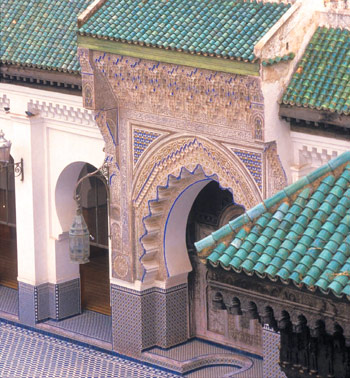
In addition, attempts to introduce modern education faced strong resistance from conservative religious leaders and madrasas. An article in Time Magazine of October 24, 1960, conveys the drama of the situation. Prior to independence, it reported, Morocco’s most famous university, , had sunk into a “long intellectual sleep…as a kind of Moslem Kaffeeklatsch, without exams or degrees, a place of courtyard classrooms where masters and disciples swatted fusty theological disputes.“
And then:
Determined to propel his nation into the 20th century, King Mohammed [V] slashed Karaouine’s religious studies, introduced math, physics, chemistry and foreign languages. In 1957 he jolted traditionalists by setting up a female branch at Karaouine, where the enrollment (6,325) now includes 1,197 women.
The struggle went on until the fall of 1960, Time reports: “Karaouine’s hidebound ulemas protested that the King’s ‘modern education’ was spreading ‘license, debauchery and degeneracy.’” But the King refused to give way, and as the “Commander of the Faithful” the King insisted. Finally, a month before the 1960 anniversary ceremonies,
facing the collapse of their powers, the white-gowned ulemas abandoned plans to boycott the anniversary ceremonies [and] glumly turned out to hear Mohammed extol the university’s “renaissance.” After centuries of slumber, Karaouine now has a fair chance of once more becoming the intellectual Mecca of northwest Africa.
Al Karaouine was on its way back to greatness. But a whole nation still needed to be educated and brought into the 20th century. The Time reporter continues:
As a result, literacy for men aged 15-24 rose to 84% by 2008, while the percentage of all students completing primary school rose to 87%.
Soon will come another big revolution: 3,000 cramped boarders will move into airy dormitories on the new campus outside Fez, which will boast 70 nd such unheard of niceties as laundry, athletic field, infirmary, and dining halls.
Over the next few decades, similar scenes, large and small, played out throughout all the cities, towns, and villages of Morocco as King Mohammed V and his successor King Hassan II sought to introduce education to the people of Morocco. In many of the rural, tribal areas resistance to education in general, and to female education in particular, lasted for decades.
Both this resistance, plus a very high fertility rate that raised Morocco’s population from about 7m in 1956 to almost 32m in fifty years meant a stupendous national effort had to be made. Successive kings never relented on their insistence. So determined to achieve education for all Moroccans, spending on education held steady for years at the unusually high rate of 24% of the national budget, and 5% of GDP.
In 1999, King Mohammed VI once again expressed his ,” which was kicked off with the publication of a “National Charter for Education and Training”—a complete roadmap of reform for every sector of government and society to achieve national literacy. As a result, literacy for men aged 15-24 rose to 84% by 2008, while the percentage of all students completing primary school rose to 87%.
In 2010, the King kicked off a new effort, a four-year “Emergency Plan” to meet  the UN Millennial Plan goals by 2015. This plan calls for building 15,300 educational facilities and renovating 300 schools. It also involves 17 new agreements—commitments—to improve the quality of universities across the country, which involve hiring new teachers, raising teaching requirements, and expanding facilities. The number of engineering and science students in universities is expected to double by 2012. The government’s goal is also to raise the number of its universities designated for research from 69% in 2008 to 92% by 2012.
Maghreb Union Higher Education and Scientific Research Council
Morocco’s universities have also been leaders in the Maghreb Higher Education Council to upgrade and coordinate university education among all the nations of the Maghreb Union (Libya, Tunisia, Algeria, Mauritania, and Morocco). Special meetings of the education ministers of these countries were held in Tunisia in December, and of the university presidents of these countries in Morocco in early January. A large number of plans were adopted relating to interchangeability of credits and degrees, distance education, virtual campus project, joint energy and ICT research and laboratory sharing, textbook coordination, etc. But it is unclear at this time, due to civic unrest in some of these countries (e.g., Tunisia and Libya), how quickly these plans will develop.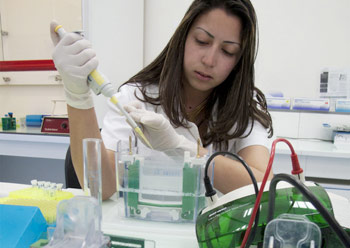
Morocco has committed itself, not only to full public education and literacy, but also to establishing both a public and private world-class system of higher education. Presently Morocco has approximately 25 colleges, universities, and institutes engaged in higher education, among which are: