
Kuwait Banking: Recovery of Kuwait Banking Sector
“I think that Kuwait banking system has gone through some very difficult times, and that 2010 will still be difficult and I think the banks have to prepare for the inevitable full turn around. How long it will take, however, is anybody’s guess”, Michel Accad, CEO of Gulf Bank
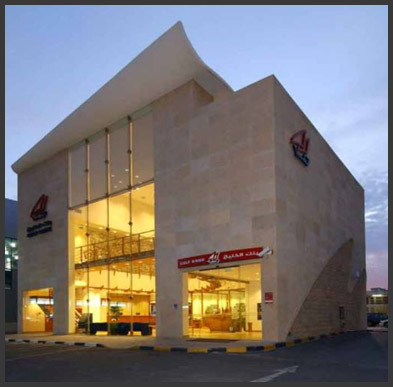 The severity of the global financial crisis is proved by the fact, that even oil states were not immune from the impact of Lehman Brothers’ downfall. And although oil prices picked up since their drop below U$40 per barrel at the start of 2009, it is still too soon to relax. “I think that the Kuwait banking system has gone through some very difficult times, and that 2010 will still be difficult”, Michel Accad, CEO of Gulf Bank, point out. “I think the banks have to prepare for the inevitable full turn around. How long it will take, however, is anybody’s guess”, he adds.
Kuwait’s banking and financial sector has been a closed, state-owned sector for quite a while. Nationalized in 1971, foreign banks have been allowed to return only since 2004. The reaction of globally operating foreign banks followed immediately. After 33 years of absence, HSBC re-launched its operations in the year 2005, followed by Citigroup and France’s BNP Paribas. Switzerland’s largest bank, Credit Suisse, strongly present in Dubai and Qatar, says that it is examining opening a branch in Kuwait.
But the healthy mix of local, Islamic, and foreign banks cannot hide the fact that the country is dominated by the National Bank of Kuwait (NBK).
The 1952-founded bank with the blue camel in its logo, was the first indigenous bank in Gulf region. With its home market in Kuwait, NBK has the largest market share (one third) in relation to assets under management. Abroad, NBK has branches in 12 countries. Among its global network are cities that are popular among Kuwaiti businessmen and women; for example, Jeddah, Singapore, Paris, London, New York and Geneva.
Strong links to the Western hemisphere have also made the Kuwaiti financial sector more vulnerable to the financial crisis triggered by the US sub-prime crisis which led eventually to the fall of Lehman Brothers investment bank in September 2008.
According to the Kuwait-based Global Investment House, the Kuwait banking sector was the only profitable sector in the GCC during the financial year 2009. Combined net profits rose by 70.22 per cent (U$1.23bn) from the previous year.
But this was only because NBK reported a profit growth of 3.87%, while all other banks posted declines. Burgan Bank has reported the largest slump in net income of 83.24% while Commercial Bank of Kuwait did not even disclose its financial results. “I think Kuwait was affected because of the lowered oil prices we witnessed in the first half of 2009. This was when prices declined to somewhere in the range of U$30.00; obviously, they ended up affecting the production levels“, says Maha Al-Ghunaim , Chairperson of Global Investment House.
Ms. Al-Ghunaim symbolizes for many women the progress of modern Arabia.
She is mother of four children and founded Global Investment House in 1998, and built it up from scratch. Ms. Al-Ghunaim as a chairperson gave Kuwait banking and banking in the Middle East a new face.Married and a mother of four children, “MG,” as her employees call her, stuns Western women in particular, who always struggle with the choice of whether they should pursue a career or found a family. Ms. Al-Ghunaim shows that they can do both.
In 2009, however, Global Investment House stood in the limelight after it partially defaulted on loans. But “the bomb could be diffused”, says chairperson Maha Al-Ghunaim. Global Investment House has rescheduled its 1.7 billion dollar debt with its creditors, making it the first Kuwait investment firm to come to a deal with creditors. If it fails to repay 700 million dollars of debt in two years the creditors can convert the amounts short of the sum into shares.
Instead of complaining, “MG” stresses, that not all Arab oil states have been affected by the crisis in the same way. Maha Al-Ghunaim: “For example, the Saudi market is  performing about 25% year-to-date and the UAE is around 15.8%. Kuwait and Bahrain are the only countries to have generated negative returns as an equity market for year-to-date.” In addition to that, the so-called financial stability law passed in Kuwait in March 2009 stipulated that the government will guarantee 50% of new loans from local banks to productive sectors.
“Regarding the central bank, I think it have done a pretty good job. In the case of Gulf Bank, they intervened quickly and decisively to restore confidence in the market by standing behind their banks”, says Gulf Bank’s Michel Accad. On February 23rd, Gulf Bank announced operating profits of KD83m for 2009. However, provisions requiring KD111m for the credit portfolio led to a net loss of KD28m for the year, or 12 fils per share. “Despite a substantial increase in the credit provisions, the Bank’s capital ratio, at 16%, remains comfortable and adequate for its needs and for future growth requirements“, Gulf Bank’s chairman Ali Al Bader says.