
Kuwait Telecom: Wataniya Telecom Leading the Kuwait Telecom Sector
Friday, 09 April 2010 01:02

Kuwait-telecom-front.pngThere is high penetration and we have 115% penetration in the Kuwait telecom sector”, recounts Scott Gegenheimer , CEO of Wataniya Telecom . Kuwaitis like to chat, whether in private or in business. A Kuwaiti without an iPhone, Blackberry or Nokia phone is like Arabia without oil, purely unimaginable.


Kuwait Telecom
: Kuwait calling

Although Kuwait's Telecom sector is not supervised by an independent regulator, the country witnessed increasing competition in recent years.

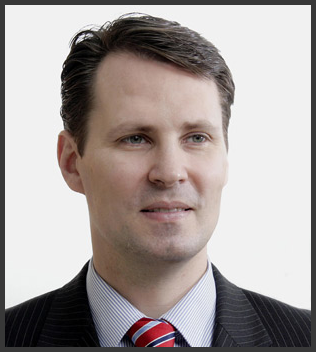
It is not easy in the competitive Gulf Region to retain a first mover advantage. When Kuwait became the first country in 1999 to open its cellular market to competition, its neighbor states suddenly appeared like dormant accounts. “There is high penetration and we have 115% penetration in the country”, recounts Scott Gegenheimer , CEO of Wataniya Telecom. Kuwaitis like to chat, whether in private or in business. A Kuwaiti without an iPhone, Blackberry or Nokia phone is like Arabia without oil, purely unimaginable. Wataniya-Telecom-ceo-scott-Gegenheimer.png

Wataniya, which is short for National Mobile Telecommunications Company, entered the market with its distinctive red W-logo at the end of the last millennium. The incumbent MTC Kuwait changed its name meanwhile into Zain (Arab. good).  Zain is listed at both the Kuwait Stock Exchange KSE and the Dubai Financial Market DFM. Founded in 1983 as the region’s first mobile operator, Zain emerged as one of the leading players in the Middle East and Africa. It is now present in 22 countries, and has a client base 56.3m people


Kuwait telecom is another sector suffering from endless rows in the parliament. “There is no regulatory agency in Kuwait and only a Ministry of Communication. However, we expect that by the end of the year a regulatory body will be created. I have been here two years and we have gone through three parliaments and four different Ministers of Communication but we think things will stabilize and continue to grow.” explains Mr. Gegenheimer .


VIVA is the third operator in Kuwait. “We were successful in doing this and we managed to capture more than 10% of the Kuwait telecom market- this shows that we planned carefully and met our target as a third operator in Kuwait”, says VIVA’a CEO Najeeb Al-Awadi.


kuwait-telecom-market.pngWataniya had a 1.46 million customer base in Kuwait at the end of quarter three in 2009 an increase of 13.6% from 2008. Gegenheimer and his employees also reach out to new technologies: “We work with banking sectors and they use our data products on their ATMs to link back to their head offices, the restaurants’ credit card machines use our products, and wireless is becoming huge through the ITC sector and society in general.  People don’t always notice it or see it but it exists everywhere and this is what’s driving the market and growth in general.

But Wataniya Telecom also faces challenges. In April 2010, the firm announced that it will delay listing of its shares on the Qatari stock exchange. The listing was scheduled to take place on April 13. No new date for the listing has yet been provided.

Kuwait, Wataniya, innovation, market, mobile, operator, sector, technologies, telecom, telecommunication
Related Articles
Comium Côte d'Ivoire: Close To The PeopleComium Côte d'Ivoire: Close To The People... - ( 07-11-2011 15:10:26)
Michel Hébert, Chief Executive Officer of Comium Group (Koz) Comium Côte d'Ivoire is one of the mobile operators in the Côte d'Ivoire market. Upon ...
Tamkeen: Supporting the Private Sector Through Training of BahrainisTamkeen: Supporting the Private Sector Through Training of Bahrainis... - ( 21-07-2011 07:42:30)
Dr Nasser Ali Qaedi, Head of planning and business development of Tamkeen Tamkeen was created as a part of the overall reform process initiated by...
Exploding Diabetes Rates in Kuwait: Kuwait Heading to a CollapseExploding Diabetes Rates in Kuwait: Kuwait Heading to a Collapse... - ( 20-04-2012 00:34:46)
Kuwait Videos Exploding Diabetes Rates in Kuwait: Kuwait Heading to a Collapse Kuwait has the 3rd highest rate of Diabetes. About 250,000 (out o...
Reforms in Morocco: Morocco Emerging Manufacturing Base for Europe Reforms in Morocco: Morocco Emerging Manufacturing Base for Europe ... - ( 25-03-2011 11:12:00)
Minister of Industry, Commerce, and New Technologies, Ahmed Reda Chami We are the only country that can offer the proximity, production costs, FTAs...
 
[Back]

Add comment


Top Interviews
Mr. Tarek Sultan, Chairman & MD of Agility Logistics in Emerging Markets

Tarek Sultan, Chairman & Managing Director of Agility

Agility is a global logistics player with platforms in 120 countries, including the emerging markets. Particularly the Kuwaiti platform is very important to Agility because of the country`s proximity to Iraq. Thanks to its location, Kuwait is going to be a great place to do business in the close future, according to Mr. Sultan.

Dr. Winfred Thompson, President of American University of Kuwait (AUK) Education in Kuwait: American University of Kuwait (AUK)

Dr. Winfred Thompson, President of American University of Kuwait (AUK)

Dr. Winfred Thompson is giving a brief overview of the education system in Kuwait and the biggest challenges for the education in Kuwait. As a representative of higher education in Kuwait, the American University of Kuwait (AUK) offers liberal arts education in Kuwait.

Farouk Al-Zanki, Chief Executive Officer of Kuwait Petroleum Corporation KPC Projects 2012: Corporate Social Responsibility Projects

Farouk Al-Zanki, Chief Executive Officer of Kuwait Petroleum Corporation

Corporate social responsibility is a part of KPC's strategic issues as a national company. Environmental protection is a priority for KPC. Mr. Al-Zanki shortly talks about KPC's projects in the area of corporate social responsibility for 2012.

Michel Accad, CEO of Gulf Bank Gulf Bank of Kuwait: 2nd Largest Bank in Kuwait

Michel Accad, CEO of Gulf Bank

Our ambition is to be a dominant player in the local retail and commercial banking space. Being a dominant player means you really need to have something like a 15% market share. Today, we are far from that; we're in the range of 11 or 12% depending on the specific product.