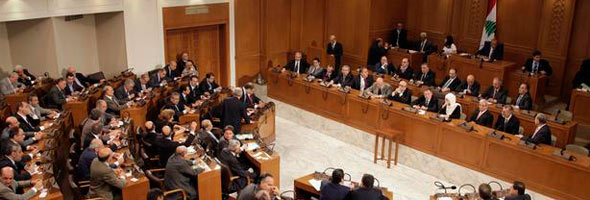
Lebanon Economy: Challenges and Economic Growth Potential
In 2008, the first year of the Doha Agreement that signaled the end of internal violence, the economy grew by 8.5%, 9% in the following year, and is on course to grow 7% in 2010.
Oh, if only we had such problems
It seems impossible to describe the current economic situation in Lebanon without the risk of sounding like a booster, or a salesman touting a product that is too good to be true. But the fact is that every sector of Lebanon’s economy is booming, has been booming for the past three years, and—barring another war with Israel or a general conflagration in the Middle East—is predicted to continue booming.
In 2008, the first year of the Doha Agreement that
signaled the end of internal violence, the economy
grew by 8.5%, 9% in the following year, and is on
course to grow 7% in 2010.
The important thing to keep in mind is that this growth is the result, simply, of peace and independence—the cessation of internal and external violence and foreign meddling. On these two issues, the voters are in overwhelming agreement, and all the parties and factions are pledged to maintain it.
 The government and almost every segment of the economy, of course, face problems—major problems—but the important thing for investors to keep in mind is that any failure to solve these problems, while such failure may slow growth, is unlikely to stop it.
On the other hand, almost all the problems are ones that the government can solve by making reforms that are already in the pipeline. But, fueling optimism for the future is the fact that almost every needed reform comes with a payoff in greater economic growth; that is, the costs are quickly paid back by the economic gains and greater revenue.
A good example of this is the state of electrical services. Beirut and much of Lebanon have only intermittent electricity, with frequent brown outs, sometimes daily. But a proposal is already before the cabinet to build generator plants that will raise electricity generation by 4000 megawatts by 2014, and by 5000 in 2015. The cost of the 4000 megawatts is $4.87 billion, which will be funded by the Lebanese government ($1.55 billion), the private sector ($2.32 billion) and donor countries ($1 billion).
Consider the cost benefit ratio of this reform. Presently the government-run electrical generation sector has an annual expected loss of $4.4 billion in 2010, which is estimated to rise to $9.5 billion by 2015—if the reform is not enacted. However, if the project is approved, Beirut will not only get 24/7 electrical service stimulating growth of other sectors, but losses on electrical generation are likely to drop to zero.
Another example is broadband expansion, which is essential to every IT and internet dependent sector, including telecom , banking , education , health services, as well as tourism . According to Khaldoun Farhat , General Manager of Cable One, “The World Bank assessed that a 10% increase in the broadband infrastructure in Lebanon could result in 1.2-1.5% increase in GDP and the capital expenditure needed for that is far less than the return in one year.” In regard to his own company, Farhat says,
“Over the past 4-5 years we have seen growth of around 15-20% and this has been restricted by the unavailability of the basic ingredients for internet-international capacity and availability of access lines. If these restrictions were moved, these ingredients present, and reform took place, we could easily see 40-50% growth in the telecom sector .”
Both of these projects will involve some change in the government’s approach to converting some government run sectors (such as IT, Telecom , and utilities) to private management and operation (privatization ). But almost all of the reforms carry payback in both short and long term growth of the entire economy.
For example, one of the biggest problems faced by
both the economy and the government is government
debt, which is presently at 147% of GDP.
However, three years ago, the debt was running at over 186% of GDP, and the reduction is mostly in the ratio based on the spectacular growth of the GDP over that period.
There are many other problems that Lebanon is facing with similar win-win solutions. All that is needed is time for the politicians to receive, discuss, and decide to implement them.