
Recent Contemporary History of Côte d’Ivoire
Côte d’Ivoire Top Stories
Recent Contemporary History
While Côte d’Ivoire has a long and proud history, it is the events of the most recent two decades that cast the longest shadow over its future.
Recent Contemporary History
While Côte d’Ivoire has a long and proud history, it is the events of the most recent two decades that cast the longest shadow over its future.
While Côte d’Ivoire has a long and proud history, it is the events of the most recent two decades that cast the longest shadow over its future. These begin in the last years of Houphouët’s life, when he was very ill and for long periods in a hospital in France.
From approximately 1990, Alassane Ouattara, the current president of Côte d’Ivoire was the prime minister, largely administering the country in the president’s absence, and was believed to be Houphouët’s chosen heir. But shortly before he died, Houphouët changed his mind, and Henri Konan Bédié, president of the National Assembly succeeded Houphouet to serve out the term. 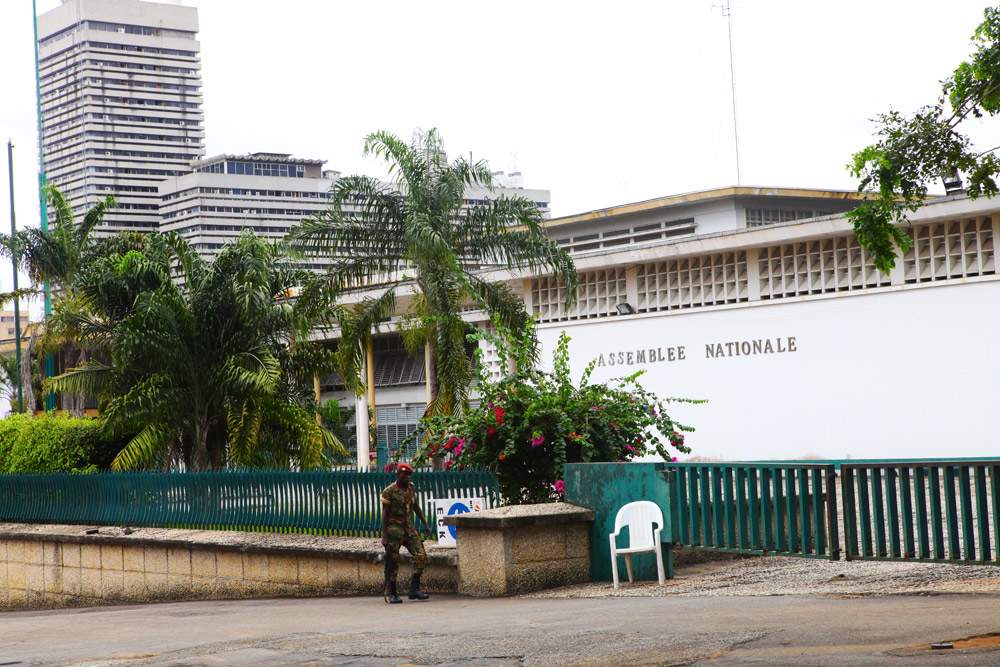
At the next election in 1995, Ouatrarra was nominated by one of the parties, but the Parliament enacted a law requiring the president to be an Ivorian cititen born of two parents who were citizens. As a result, Ouatrara withdrew, and both his party and that of Laurent Gbagbo boycotted the election, resulting in Bedie being overwhelmingly reelected.
After the 1995 election, Ouatrarra served as deputy managing director of the IMF, but he returned to Côte d’Ivoire preparatory to running for president in the 2000 election.
Two Coups—the bases of successive civil wars since 1999
In late 1999, a military coup was staged, which unseated Bedie and put General Robert Guei in power. Prior to the next election in 2000, however, the Supreme Court ruled Ouatrarra ineligible to run. This sparked protests by Ouatrarra’s supporters in the north, who battled police. In the election, however, Guei was defeated by Laurent Gbagbo.
In 2002, another coup attempt was staged, this time against Gbagbo, although it is unclear whether this coup was led by Ouatrarra of former president Guei. In any event, the rebels established control in the north of the country and were moving south, but French forces stationed in the country under previous agreements intervened to stop the advance in order, it was claimed, to protect civilians. Much is disputed about what happened in this coup attempt, but the result was that Gbagbo stayed in power, though the fighting continued intermittently.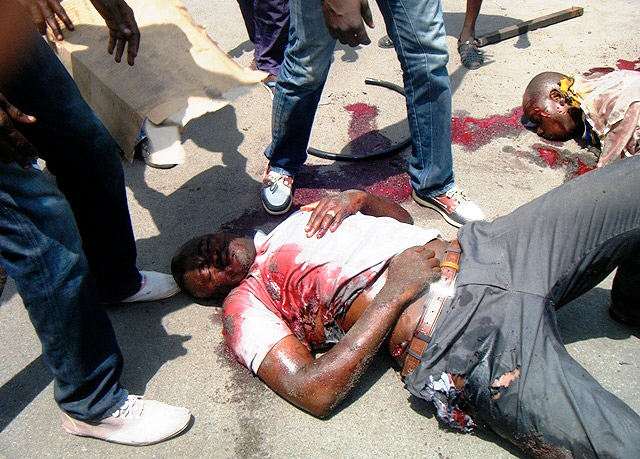
In 2003, a cease-fire was negotiated, which unfortunately soon broke down. UN peacekeepers were deployed to enforce a “Zone of Confidence” between the government and rebel forces.
The next election was required under the constitution for 2005, but due to the lack of disarmament was postponed. The United Nations Security Council, which had already intervened by deployment of peacekeepers, approved an extension of Gbagbo’s term until 2007. A peace accord between the government under Gbagbo and the rebels was signed on 4 March 2007. Nevertheless, new elections were not held until November 2010. Meanwhile the country underwent considerable unrest.
In the election held in November 2010, both Gbagbo and Ouatrarra were declared victors; Gbagbo by the electoral court of Côte d’Ivoire, and Ouatrarra by an international commission of observers. The United Nations, which under the 2007 agreement was required to certify the results, accepted Ouatrarra as victor. Nevertheless, Gbagbo refused to relinquish the presidency, and civil war broke out.
Both candidates were sworn into office, while the army closed the borders, and international journalists were banned. In addition to the United Nations Security Council, the African Union, the European Union, ECOWAS, the United States, France, and the IMF recognized Ouatrarra. Ouatrarra attempted to negotiate with Gbagbo, but when this failed, ordered a military offensive from the north began which rapidly took control of most of the country. 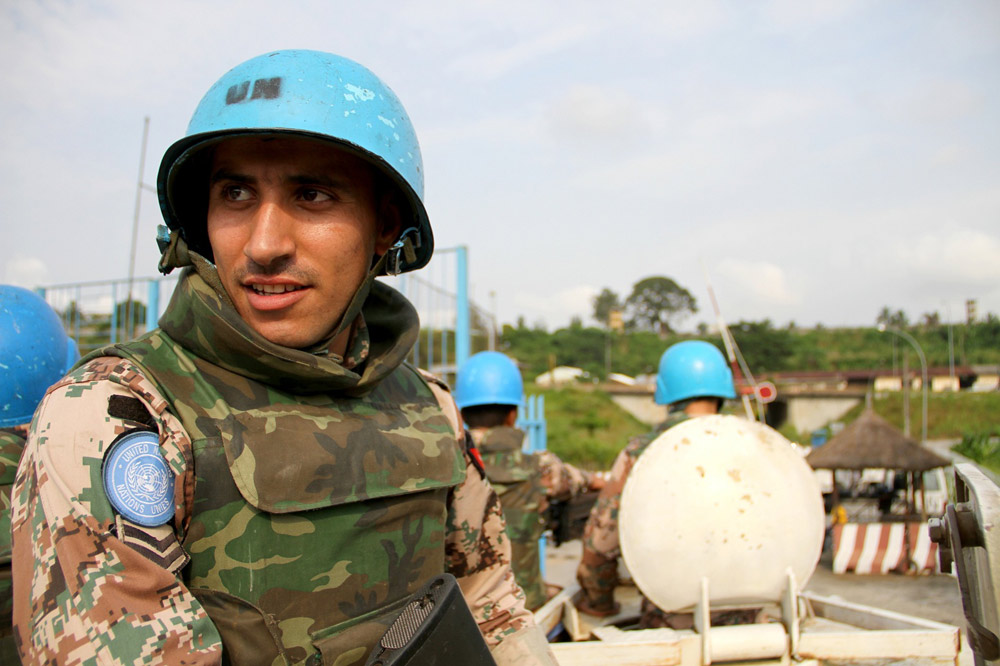
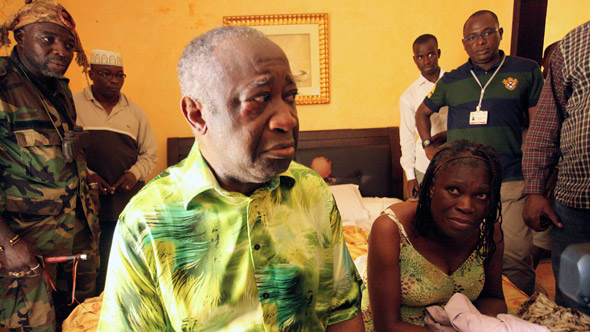
The result was decided when French troops joined the attack on the presidential palace in Abidjan on April 11, 2011, enabling Ouatrarra’s forces to arrest Gbagbo. Subsequently, the following November, Gbagbo was handed over to the International Criminal Court for trial on charges of human rights violations. It is claimed that horrific violations of human rights were committed by both sides in this period, although at this point only Gbagbo is charged. Other investigations are in progress. Many supporters of Gbagbo still refuse to accept the result, and pockets of Ghagbo support were still being cleaned up through the summer.
Since the arrest of Gbagbo, the government of Alessandro Ouatrarra has been attempting to establish order and restart the economy.