
The Story of Chateau Kefraya
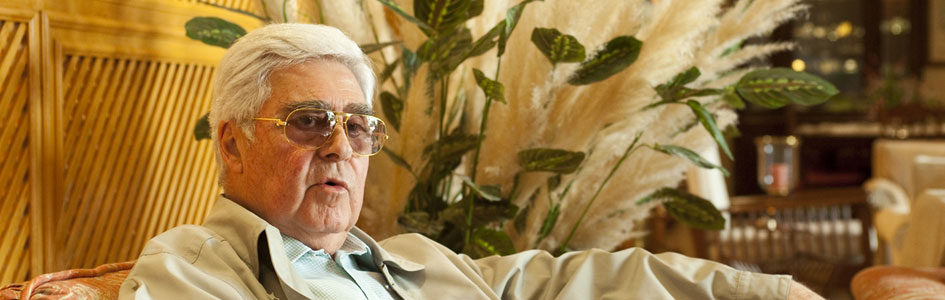
The motto of de Bustros and Château Kefraya is “Semper Ultra,” which means “Always the Best.” To everyone at Château Kefraya, it means that no matter how well they do, they are always striving to do better. But for de Bustros this obligation is not due to the grape, but to art. “In Kefraya,” he says, “we are not making wines, we are making Kefraya. The taste is a melody.”
The Story of Chateau Kefraya
No story so illustrates the spirit of Lebanon overcoming adversity and the rebirth of an ancient art winemaking as an art, as does the founding and growth of Château Kefraya.
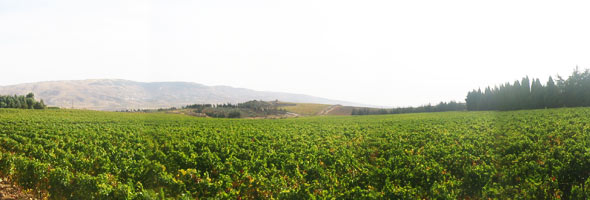
Michel de Bustros inherited the initial plots of land that were to become Château Kefraya in 1950. But making wine was to be a long way in the future. First, the land would have to be cleared; then terraces laboriously dug and walled up the side of a mountain to an elevation of 1100 meters. After the terraces were in place, the soil would have to be prepared and vines planted; then lovingly nursed to maturity. Meanwhile, cellars were to be tunneled out, wine presses purchased and put into place; fermentation equipment, and bottling lines housed, and
assembled. Through all this, long nights were spent in research to learn every trick of the vintner’s art, and the most scientific processes mastered.
This was to take 28 years.
 Four years before the first wine was to be produced, a civil war broke out. The Bekaa valley was one of the headquarters areas of Hezbollah and, consequently, the scene of battles, bombs falling, and soldiers fighting across the valley, including the lands of Château Kefraya. “I don’t know if at that time it was wise to start… Not many people were starting any sort of business,” de Bustros says, “it was really adventurous.”
De Bustros’s dream of wine was never just a product in a bottle. From the beginning it involved a total environment for wine appreciation. This meant that in addition to planting the vineyards, De Bustros planned, built, and cultivated around the winery’s cellars a 10,000 acre paradise of gardens, orchards, tree-lined streets, fountains, and arboreta. De Bustros loves opera, and that is the theme of each label he puts on his wines: naming them after famous female opera singers, and hiring women artists to make paintings of them to grace the labels of his red wines.
The streets winding throughout the acres of gardens and orchards that surround the winery’s cellars are named after opera composers, such as Parc Verdi, Parc Rossini, Parc Bellini, and Parc Puccini. The streets are named after plant species: Rue de Gyneriums, Rue de Eucalyptus, etc. When asked about what Lebanon most needs to boost tourists, de Bustros suggests “an opera house.”
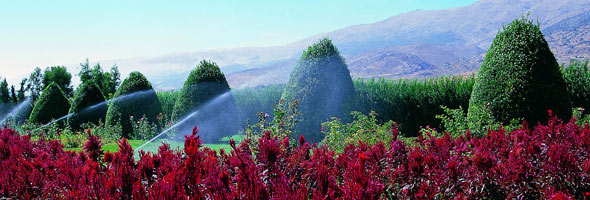
De Bustros ’s philosophy is that “Wine cannot be produced in an ugly environment. Good wine in an ugly bottle wouldn’t be the same.” That is why de Bustros has spent almost as much time in designing the total wine experience of Château Kefraya as he has designing—blending—the wine itself to perfection. The gardens include patches of pampas grass, and orchards of apple, cherry, peach, and pistachio trees. The streets are lined with orange-blossomed picaranta shrubs.
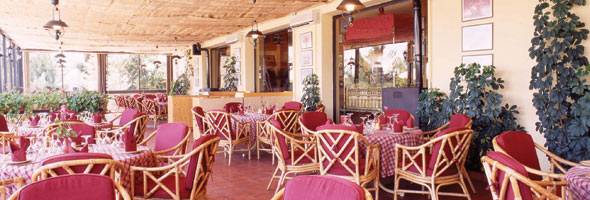
With the Châteaugrounds is a restaurant with a gourmet menu that compliments the wines, and outside is patio to enjoy sipping wine through the beautiful rain-free evenings of Bekaa valley’s climate. Tours of the cellars, the vineyard terraces, the lawns and the orchards are conducted for the thousands of tourist who descend on the winery each year to enjoy its total wine experience.
Perhaps de Bustros really sees himself living in an opera. When he decided the time had arrived to begin wine production in 1979, it was hardly auspicious: it was four years into Lebanon’s fifteen year civil war, and his portion of the Bekaa valley was a main headquarters and staging headquarters of Hezbollah—which made it a natural military objective of both of the other factions in the civil war and the Israelis. Battles raged and bombs fell all around as his vineyards, and indeed the whole valley.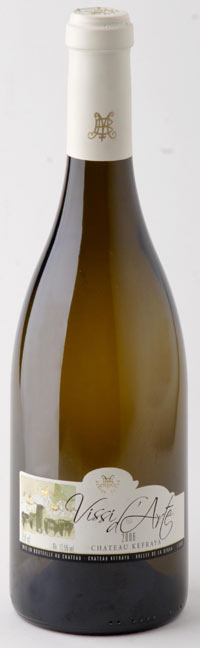
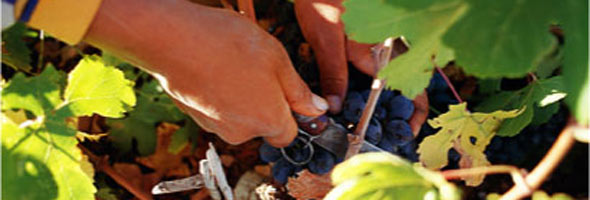
Kefraya was the scene of several hard fought battles. But wine production and work on the estates continued nonetheless. Sometimes he or his employees had to negotiate with one side or the other just to let their trucks get through to market. In 2006, the Israeli strikes into Lebanon led to bombing raids that threatened to stop the harvesting at peak time. Fortunately, the five week war ended just in time to let the pickers get back into the fields and save the crop.
Château Kefraya differs from the vast majority of wines on the market by being blended instead of made with only a single strain of grape. Thus, every wine is the product as much of the wine-maker’s mind and taste as it is of the grapes it is fermented from. Thus Château Kefraya’s wines are not “made,” they are “composed”—much like the operas whose memories are evoked throughout the estate. Château Kefraya’s technical director and oenologist, Fabrice Guiberteau sums up the total wine experience, its connection with de Bustros love of opera, and the taste of internationally acclaimed wines perfectly:
“At Château Kefraya we do not make wines,
we are making Kefraya. The taste is like a melody.“
However, the sense of Terroir—the French word roughly translated as the “sense of the place” and meaning the sum of the effects that the local environment has had on the nature of the product—is maintained. All wines blended for Château Kefraya wines must come from other types of vines grown at Château Kefraya, or from other vineyards in the Bekaa valley. Thus the principle of Appellation d’Origine Controlee (AOC) is rigidly maintained.
This brings us to the land, the soil, and the climate of the Bekaa valley. In the nineteenth century, Jesuits noticed that in the Bekaa valley had the perfect combination of these for wine growing, and rediscovered what had been known and celebrated for almost two millennia before winemaking died out in the region.
Michel de Bustros realized the same. The soils of the mountain slopes are poor for many crops, but ideal for growing grapes. The climate has three hundred days of sunshine a year, and six full months a year with no rain—perfect for grapes. The soil holds enough water through the dry months to not even need irrigation.
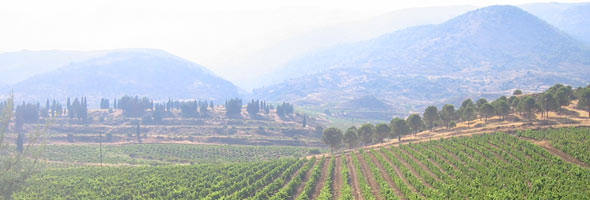
(But artesian wells supply plenty of water for the orchards, shrubs, and lawns.) De Bustros spent almost thirty years terracing the side of a mountain, up to nearly 1100 meters in order to take advantage of these ideal conditions on almost a thousand acres of land.
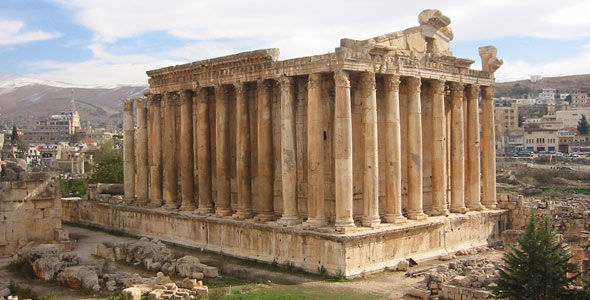
Speaking of history, many wine tourists combine tastings with jaunts to the temple city of Baalbek, where some of the largest and best preserved and largest Roman and earlier ruins of temples are to be found. Among the greatest attractions is the huge temple of Baachus (officially the Temple of Venus, but because of its many carvings of wine and grapes is thought to really dedicated to the god of wine). Each summer the Baalbek International Festival of Music attracts 40,000 attendees, many of whom before or afterwards visit the vineyards of the Bekaa valley to pay suitable respect to the “god of the festival.”
 Michel de Bustros also believes that that there is more than drinking to wine, and wants to develop tourism not only around tasting wine, but learning its history and its art. The Bekaa valley, because of its long history of wine making is ideal for this kind of study and teaching.
Château Kefraya originally made four kinds of high-class specialty wines, which it calls Celebration wines, Pleasure wines, Prestige wines, and Premier wines. Since the early 1990s, its wines have won more than fifty gold, silver, and bronze medals at international wine competitions in France, Belgium, England, Spain, and other places.
Château Kefraya has grown into quite an international
marketing operation. More than 40 percent of its annual
production of 2.35 million bottles is sold to more than
40 countries worldwide on five continents.
The rest is sold in Lebanon, largely in high class restaurants. The strategy, according to de Bustros, “is to be everywhere… the challenge is taking high-end restaurants worldwide and integrating our trade-off profile.”
 But selling the Kefraya brand name also means selling Lebanon. “The most challenging part is that you always have to talk about Lebanon when you talk about Château Kefraya. In some areas people do not have a lot of knowledge about the country and educating these people can be a challenge.”
The motto of de Bustros and Château Kefraya is “Semper Ultra,” which means “Always the Best.” To everyone at Château Kefraya, it means that no matter how well they do, they are always striving to do better. But for de Bustros this obligation is not due to the grape, but to art. “In Kefraya,” he says, “we are not making wines, we are making Kefraya. The taste is a melody.”
A dozen years ago, de Bustros decided to share ownership of the winery by selling shares to Lebanese investors. But de Bustros’s standards and tastes sill run the show.It is the hope of de Bustros and many other winemakers in the region that other quality vineyards will be planted throughout the Bekaa valley, until the entire region becomes known around the world for the quality of its grapes and wines.