
UAE Banking when Banking in UAE becomes the driver of growth
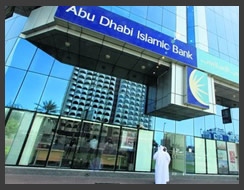
“UAE banking sector posted nearly $6.8 billion in profits for 2007, an increase of 29%. UAE Banking with economic fundamentals remaining strong, even the spread of the US subprime contagion may not make its way into the UAE banking sector”, says Ibrahim, whose bank is also facing growing competition. UAE Banking and Abu Dhabi Islamic Bank is booming, too. “Abu Dhabi Islamic Bank’s (ADIB) net income in the three months to March 31 – after depositors’ share – surged by 47% to 244.25 million dirhams ($66.5 million)”, says its CEO, Tirad Mahmoud. It is logical that a high growth of population means a treasure trove for retail banking : “The bank grew its distribution network in the UAE from 16 branches in 2004 to 44 branches as of now and will be adding four new branches by the end of the year.”
|
On top of this, the Dubai International Financial Centre (DIFC) attracted more than 215 banks, asset managers and from all over the world. Among them are leading names such as Citigroup, HSBC, UBS, Bank of Tokyo-Mitsubishi and China’s giant, ICBC. However, since the DIFC is an onshore hub, its rules and regulations are internationally compliant. |
|
|
|
|
|
Dubai Islamic Bank (DIB), founded in 1975 in the UAE, is home to the oldest licensed and regulated financial institution operating on the basis of Islamic Law (Sharia). At the time of its creation, investing and financing in line with Sharia was a niche, small and almost invisible. Today, it has become the mainstream in banking in the GCC, (except in Oman where Islamic banking is forbidden by law) and the market is growing, with 15 percent p. a., doubling every five years. The Institute for International Research (IIR) Middle East estimates that by 2015, half of the world’s 1.5 billion Muslims will invest in line with Sharia. |
|
| The rise of “Koran and Capital” | |
|
Globally, some “470 plus” Islamic banks controlled assets worth about $ 750 billion at the end of 2006. A figure which may rise to more than $ 1 trillion by 2010 as the industry sector expands according to the US management consultants McKinsey & Co. Since Western banks, dubbed as conventional banks, also run “Islamic Windows” offering Islamic funds, Sukuk or Sharia-compliant real estate financing, this figure might be even higher. Conventional banks do not usually disclose the exact amount of Sharia-compliant assets in their books. “Islamic Banking is a good means to diversify the sources of financing”, says Joseph Ackermann, CEO of Deutsche Bank AG. “Therefore, it contributes to diversifying income sources and to reducing the risk exposure of banks.”
|
|
 |
Islamic banking became one of the most innovative and lucrative segments in finance. Innovation is good, but in its nature not to everything from day one on. Arab banks have a clear advantage over their Western counterparts; they have the knowledge, the manpower and direct access to the markets. According to the World Wealth Report 2008, jointly published by Capgemini Consulting and Investment Bank Merrill Lynch, the number of people with a wealth of more than one million dollars grew in 2007 in the UAE by 15,3 percent to 78,000. |
|
For them, a night in the top suite of the seven-star hotel, Burj Al Arab, is just a tip. “Looking at Islamic Banks globally, there is a huge demand and growth for them compared to conventional banks”, as Ahmed S. Ibrahim, Chief Operating Officer of Sharjah Islamic Bank underlines. Ibrahim adds: “Islamic banks are about transparency. Not only can I call it an Islamic bank but it is also an ethical bank.” |
|
| Banking without interest | |
 |
It is of no surprise that Islamic banks still report fabulous profit figures, while at the same time Western banks shrink and are saved by capital injections from Sovereign Wealth Funds (SWF) from the Middle East. The latest bank that went bankrupt in the US was Integrity Bank from the federal state of Georgia. That was the tenth bank which ceased to exist as a result of the real estate and credit crisis. Ahmed S. Ibrahim: “Islamic banks are about transparency. Not only can I call it an Islamic bank but it is also an ethical bank. It is not only for Muslims, which was the idea before. It applies to everyone.“ |
|
So what is Islamic banking all about? It is about saying no to interest (riba), speculation (maysir) and uncertainty for any of the parties involved in business. According to Islamic law or Sharia, God has permitted trade, but forbidden interest. With this in mind, many conventional financial products are forbidden or haram. In order to be acceptable or halal, banking solutions must also exclude non-Islamic investments, such as purchases of stocks of the following industries: alcohol, tobacco, conventional banks and insurances, weapons, entertainment and pornography. Investment companies, such as Daman Investments in Dubai realized high profits, despite restrictive Sharia guidelines. “The Daman Islamic Fund, which was launched exactly a year ago, is up 12% during that period, all in a very volatile period in the UAE market”, explains Daman’s CEO Shehab Gargash. |
|
|
“UAE banking sector posted nearly $6.8 billion in profits for 2007, an increase of 29%. With economic fundamentals remaining strong, even the spread of the US subprime contagion may not make its way into the UAE banking sector”, says Ibrahim, whose bank is also facing growing competition. Abu Dhabi Islamic Bank is booming, too. “Abu Dhabi Islamic Bank’s (ADIB) net income in the three months to March 31 – after depositors’ share – surged by 47% to 244.25 million dirhams ($66.5 million)”, says its CEO, Tirad Mahmoud. It is logical that a high growth of population means a treasure trove for retail banking : “The bank grew its distribution network in the UAE from 16 branches in 2004 to 44 branches as of now and will be adding four new branches by the end of the year.” The contrast of the UAE to the Western banking environment could not be clearer. In Germany, for example, after Dresdner Bank announces that it will merge with Commerzbank and Deutsche Bank bought Post Bank, a new row of closures among German retail branches is on the way.
|
|
|
During the first six months of the year, three new Sharia-compliant banks entered the market: Noor Islamic Bank from Dubai, Ajman Bank from the Emirate of Ajman and Abu Dhabi-based Hilal Bank. Today, eight out of 52 banks in the UAE are Islamic. A USP is needed. Noor Islamic Bank is eager to differentiate itself from other banks by promising a customer-focused service. As the first branch in the entire Middle East, Noor Islamic Bank’s main branch on Dubai’s ever busy Sheikh Zayed Road is open 24 hours a day, seven days a week. |
|
|
|
|
|
Slightly affected by the credit crisis |
|
|
|
|
|
However, due to the credit crisis, Islamic Banks delayed the issue of Sukuk. Total sukuk issuance was $12 billion in the seven months to July 31, 2008, down from about $22 billion during the same period a year earlier, mainly because of the credit and liquidity crunch affecting many world markets. Although Sukuk do not pay interest, the industry preferred a “wait-and-see”-attitude. But any doubts regarding the sustainability of the growth are dispelled by the most recent figures: – Dubai Islamic Bank reported a 47 percent profit raise for the first half of 2008. – Emirates Islamic Bank announced a 321 percent jump in profits for the second quarter 2008. “We are expanding to countries where Islamic banking is almost non-existent such as Jordan and Syria”, announces Hussain Al-Quemzi, Group CEO Noor Islamic Bank. Worldwide, Islamic Banks are emerging like mushrooms. Nigeria issued the first licence to an Islamic Bank at the beginning of 2008. Meanwhile, London, regarded as the beachhead of Islamic Finance in Europe, got its fifth Islamic Bank in June 2008, called Gatehouse Bank. The pieces in the global jigsaw of Islamic Banking are yet to be set. |
|