- Home

- Africa Reports
- Morocco Report
- Morocco Top Stories
- Morocco Human Rights & Human Rights Council and King Mohammed VI

Morocco Report
Marcopolis presents the Morocco Report focused on the investments, doing business, economy and other topics featuring interviews with key executives and government officials. The sectors under review are industry, telecom, banking sector, ICT, investments and more.
StoriesMarch 31, 2011
Morocco Human Rights & Human Rights Council and King Mohammed VI

- Written by Ben Novak
- Published: March 31, 2011
Morocco Human Rights & Human Rights Council and King Mohammed VI
> Morocco Government
> Morocco Human Rights
> Morocco Women's Rights
> Morocco Political Rights
> Morocco New Human Rights Council
Morocco Government
In textbook terms, Morocco is a "strong king constitutional monarchy." Under the constitution, there is a bicameral 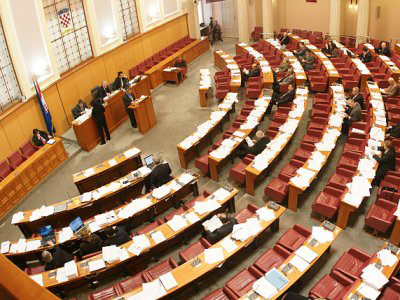 legislature, with a lower house known as the Chamber of Representatives consisting of 295 members directly elected by the people plus an additional 30 seats reserved for women ; and an upper house known as a the Chamber of Counselors consisting of 270 members indirectly elected by local councils, professional associations, and labor unions.
The government encourages political parties, and more than two dozen participate in parliamentary and municipal elections. Nevertheless, the king holds vast powers, including the right to dissolve parliament, rule by decree, and appoint the prime minister, cabinet, and supreme court—all in addition to constituting the chief executive power under the constitution.
|
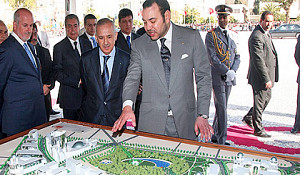
Upon his accession to the throne in 1999, King Mohammed VI sought to establish an entirely different reputation than his father, King Hassan II. He also wished to establish a basis for the democratization of the country, as well as for the continuation of the monarchy.
|

The constitution also provides that the king is not only the commander-in-chief of the armed forces, but also "Commander of the Faithful," which means that he is the chief religious figure of the nation, able to command souls as well as arms. As a result, claims that Morocco is less than a full democracy have some basis. Indeed, the king has powers and prerogatives that other "strong-man-type" presidents in the region might envy. 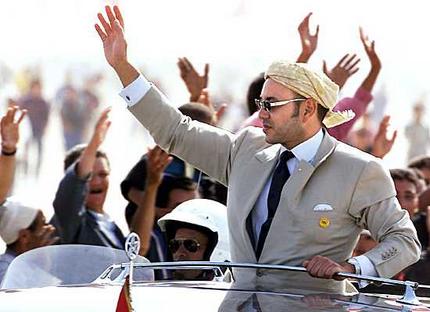
If textbook definitions were all there were to the story, it would end here: the citizenry might well be rising to replace the king and demand democratically elected leaders just as they have in Tunisia and Egypt, and are striving to do throughout the rest of the region. But this is not the end of the story, but really its beginning; for, the Moroccan king and its monarchical form of government are likely to survive as one of the most stable and respected governments of the entire region.
Upon his accession to the throne in 1999, King Mohammed VI sought to establish an entirely different reputation than his father, King Hassan II. He also wished to establish a basis for the democratization of the country, as well as for the continuation of the monarchy. Thus he set out to become a "champion" of change in Morocco in a number of different ways.
Morocco Human Rights
Although King Hassan II is remembered today as having ruled with a brutal and repressive hand through most of his reign, toward the end he took steps to reconcile with the historic opposition, and launched a series of political reforms to ensure a smooth transition to his son, including constitutional reforms in 1992 and 1996.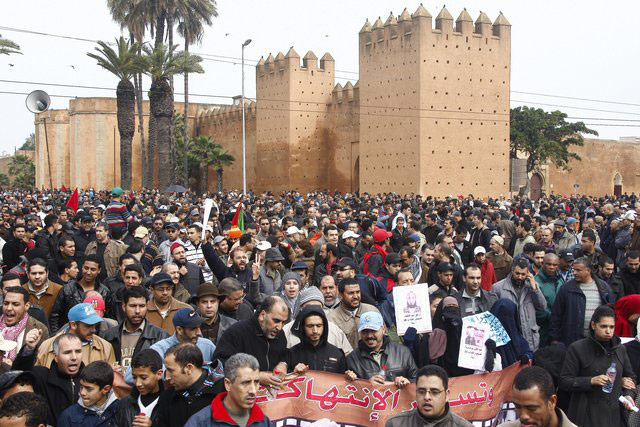
The new king, Mohammed VI, sought to break even more cleanly with the "years of lead" legacy. Among his first acts was to replace the longtime interior minister, Driss Fasri, believed to be responsible for numerous human rights violations. He next created an independent arbitration commission to compensate those who had suffered detention or human rights abuses during his father's reign. This commission heard 7,000 cases, and granted more than $100m in reparations payments.
In 2004 he also created the Equity and Reconciliation Commission to establish the truth about all human rights abuses that occurred the reign of Hassan II. This commission heard 22,000 cases, and awarded $58m in reparations payments to over 9,000 people.
As a result, Mohammed VI became clearly identified with a deep concern with human rights, democracy, and openness.
Morocco Women's Rights
The present king's grandfather, Mohammed V, had insisted on equally educating women, and had specifically presided over their admission to the universities immediately after independence against considerable religious and conservative opposition. This was a policy followed by Hassan II, although difficult to enforce in the rural and tribal areas.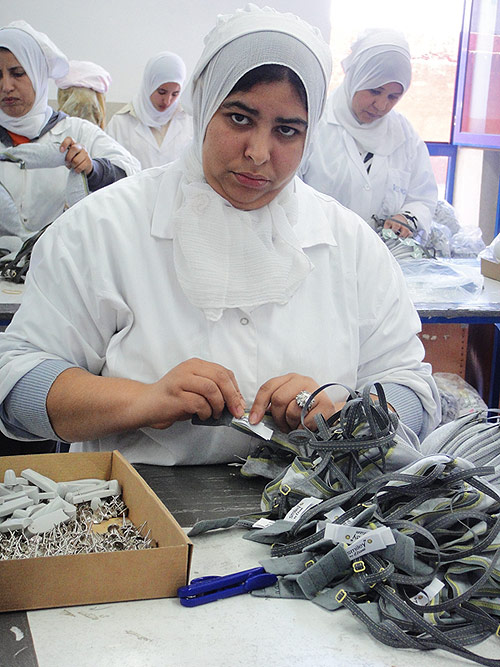
Mohammed VI, in his turn, also championed women's rights shortly after he was enthroned. This included comprehensive changes to the status of women under the family code; including raising the legal age of marriage to 18, limited polygamy, and granted women equal rights to divorce, and to child custody. Mohammed VI was able to achieve this over conservative religious opposition largely by invoking his constitutional role as "Commander of the Faithful."
Under the elections law, thirty seats of the lower chamber of parliament are specifically designated for women legislators, thus assuring their voice being heard in government.
Morocco Political Rights
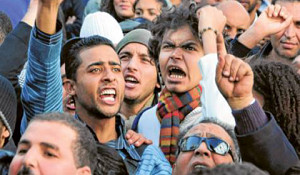
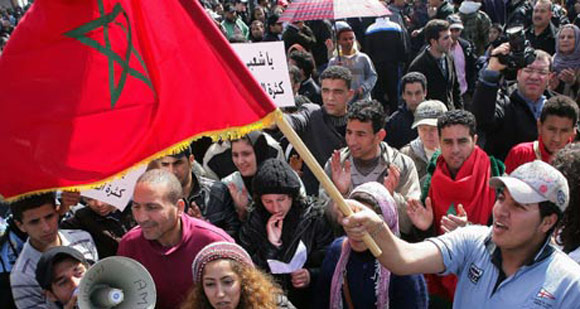
King Mohamed VI has been a constant advocate of political parties and freedom of the press. Morocco has more than two dozen active parties, a large and vibrant press, and has long recognized the rights of free speech and assembly. Numerous public demonstrations have been planned and held throughout Morocco since the outbreak of unrest in Tunisia, Egypt, and elsewhere without police interference.
This includes the major demonstrations of February 20, 2011, which involved tens of thousands of demonstrators, as well as subsequent demonstrations and assemblies.
Nevertheless, the Kingdom has had three limits on press and speech:
1) neither the role of the king nor his constitutional powers may be questioned;
2) Islam may not be spoken of disrespectfully; and
3) the government's claims to the Western Sahara region (in dispute with Polisario) may not be criticized. (This will be discussed more fully under foreign policy.)
Two issues in the past year, however, have been the subjects of concerns about press freedom. One news source was prosecuted and fined for publishing a poll on the popularity and approval of the monarchy. Although the poll results were highly favorable, the government held that the results could not be published on the basis that these questions should not even be raised. The second event occurred at the end of October 2010, when the offices of Al Jazeera were closed by government order because of its reporting on the Western Sahara.
Throughout his reign, King Mohammed VI has repeatedly stressed his commitment to democratization and reform, insisting that growth in these is essential to the development and growth of the economy, elimination of poverty, and the development of the full potentialities of the people and nation.
Morocco New Human Rights Council
On March 4, 2011, the King announced creation of a new National Human Rights Council (CNDH) to replace the functions of the Consultative Human Rights Council (CCDH) established in 1990 by King Mohammed VI's father. The new council will be made up of representatives of public authorities, non-governmental organisations (NGOs), political parties and independents, and will be led by Driss El Yazami, who is presently secretary general of the International Federation of Human Rights Leagues.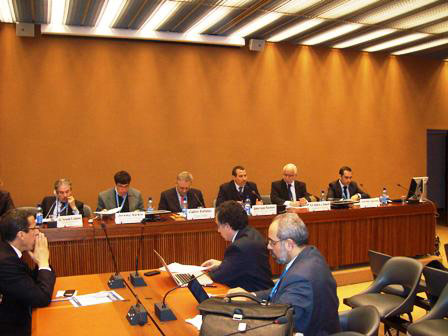
The CNDH will enjoy "autonomy vis-a-vis the public authorities" and will be endowed with wide prerogatives in the fields of human rights protection and promotion" Mohammed Sebbar, its new secretary general appointed Thursday by the king, told AFP.
Throughout all the unrest that has arisen in other Arab countries of North Africa and the Middle East, King Mohammed VI has retained the respect and loyalty of Moroccans.