
Lebanon Economy: Overview of Lebanese Economy 2010
Today, Lebanon is still dominated by its banking sector, which comprises 35 percent of the economy. Lebanese banking is a home-grown industry, by which is meant that it is largely dominated by old families with a deep treasure chest of banking experience that guides them through both good times and bad.
Economy
Evidence of civilization in Lebanon dates back more than 7,000 years. For roughly 2,500 years it was the home of the Phoenicians (cir. 3,000 to 2,500 B.C.E.), a sea-faring people who traded throughout the Mediterranean area. It was conquered and came under the domination of a succession of expansionist powers: notably Persia, Assyria, Hellenistic kingdoms, Roman, Eastern Roman, Arab, Seljuk, Mamluk, Crusader, and the Ottoman Empire, and finally under French colonial rule. Throughout each of these it grew as a trusted banking center, with corresponding gains in trade and wealth. Its capital, Beirut, one of the most charming of all Middle Eastern capitals, became known as the “Paris of the Orient,” and the country in general was referred to as the
“Jewel of the Middle East.”
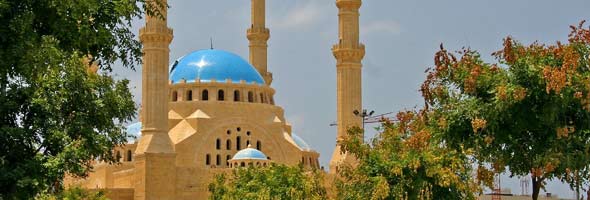
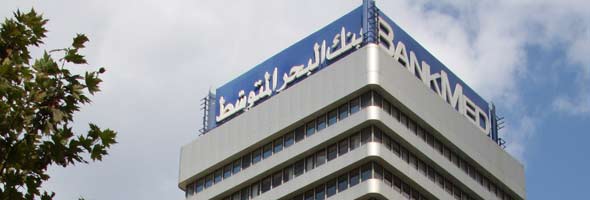
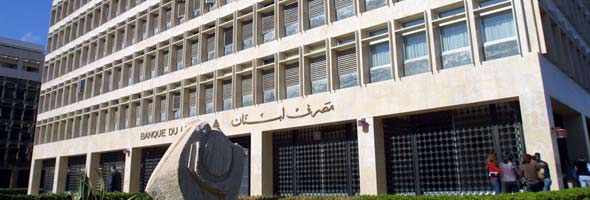
Today, Lebanon is still dominated by its banking sector, which comprises 35 percent of the economy. Lebanese banking is a home-grown industry, by which is meant that it is largely dominated by old families with a deep treasure chest of banking experience that guides them through both good times and bad. Studying the banking system with an experienced eye, Lebanon’s Central Bank as early as 2005 noted the presence of dangerous securities in the financial markets, and quickly prohibited them. As a consequence, Lebanese banks came through the 2008 global financial crisis not only without losses, but with vastly increased deposits as depositors searched for banking systems whose judgment the respected.
As to the economy, every other sector has shown the same resilience in the face of obstacles, and the same quick ability to rebound when good times come.
The Lebanese Factor—Culture and Diaspora
In any consideration of Lebanon, whether for investment or doing business there, two factors must be taken into account:
1) the commercial talents of the people; and
2) the attachment to the country of the Lebanese Diaspora.
First, the nature of the Lebanese. For at least four thousand years, Lebanon has been engaged in trading, money-changing, production for sale, banking, and business. After all that time, it is either in the bones of the people or imbibed with their mother’s milk. In either case, it is a set of skills, talents, abilities, customary attitudes, connections, and ways of thinking that make them natural entrepreneurs, investors, bankers, and business people. Neemat Frem, CEO of INDEVCO and President of the Association of Lebanese Industrialists calls it the “Lebanese Factor.” Speaking of the competitive advantage held by Lebanese industry, he said: 
“Our real competitive advantage in Lebanon is the human element. The Lebanese factor is the competitive advantage. The Lebanese factor is the young Lebanese who come from good schools in Lebanon, who have come from multi-cultural disciplines and have lived in a multicultural environment, who have left to go for higher education and grow and develop outside Lebanon to then come back with their expectations. This is providing Lebanon with very talented key executives plus it is helping us to develop a route to markets outside Lebanon to bring back their experience.”
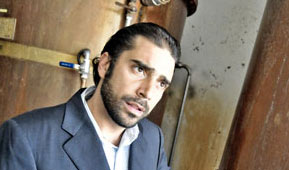
In every field, and almost every sector of the economy and society—from banking to IT , from real estate development , to industry and services—the skills, aptitudes, and attitudes of the people of Lebanon is taken to be the single most important ingredient in any recipe for success. It consists in a sound business sense, not learned so much as inherent, hard work, a sixth sense for opportunities, and an ability to survive any setback and bounce back. To any investor considering entering the Lebanese market, it must be understood: Lebanon is not so much a place, but a people.
The second great factor derives directly from the first. It is the Lebanese Diaspora, which is estimated to be
between 11 and 14 million who have left
the country over the past century,
whether because of wars and civil strife, or for greater opportunity. They maintain strong ties to extended families, trusted business practices, trusted connections, and certain traditions, such as respect for the rugged endurance of minorities to survive—for in Lebanon, they all say, “everyone is a minority.” They maintain close feelings for their homeland, and make and keep as many connections to it as they can.
George Chehwane , Chairman of Plus Properties, sees the diaspora as fueling increased real estate activity: “ex-pats have transferred their money to Lebanese banks due to the strength and confidence in the banking sector.”
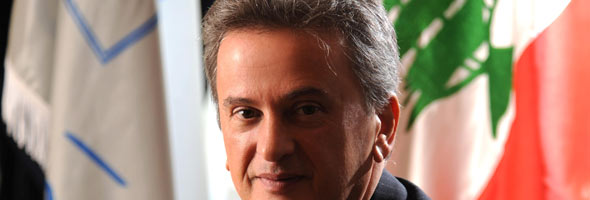
This transference of funds from the Lebanon Diaspora is often cited as a major factor in the huge liquidity of the banking system. When the global financial crisis hit, destroying savings in other banking systems, Lebanese ex-pats instinctively transferred their funds to Lebanese banks, trusting to the inherited conservatism of Lebanon’s largely family controlled banking system to protect them. Indeed, it did. The Lebanon Central Bank had detected the falseness of many types of securities and forbade Lebanese banks to trade in them as far back as 2005, and came through the global financial crisis with flying colors. The governor of the Central Bank of Lebanon , is Riad Salameh , who is universally respected for his prudence.
This kind of Diaspora involvement goes beyond crisis periods. For 2009, for example, Yassine Jaber, Former Minister of Economy and Public Works and MP, attributes much of the growth to the Diaspora.
“When looking at the Lebanese economy, you can’t look just at total economic activity, because there is a lot of international activity due to the diaspora. These people always send money back to Lebanon to invest , and I think the key to growth has been the Lebanese expatriates in various parts of the world.”